
 UAE
UAE
 Qatar
Qatar
 Pakistan
 KSA
KSA
 Oman
Oman
 Kuwait
 Bahrain
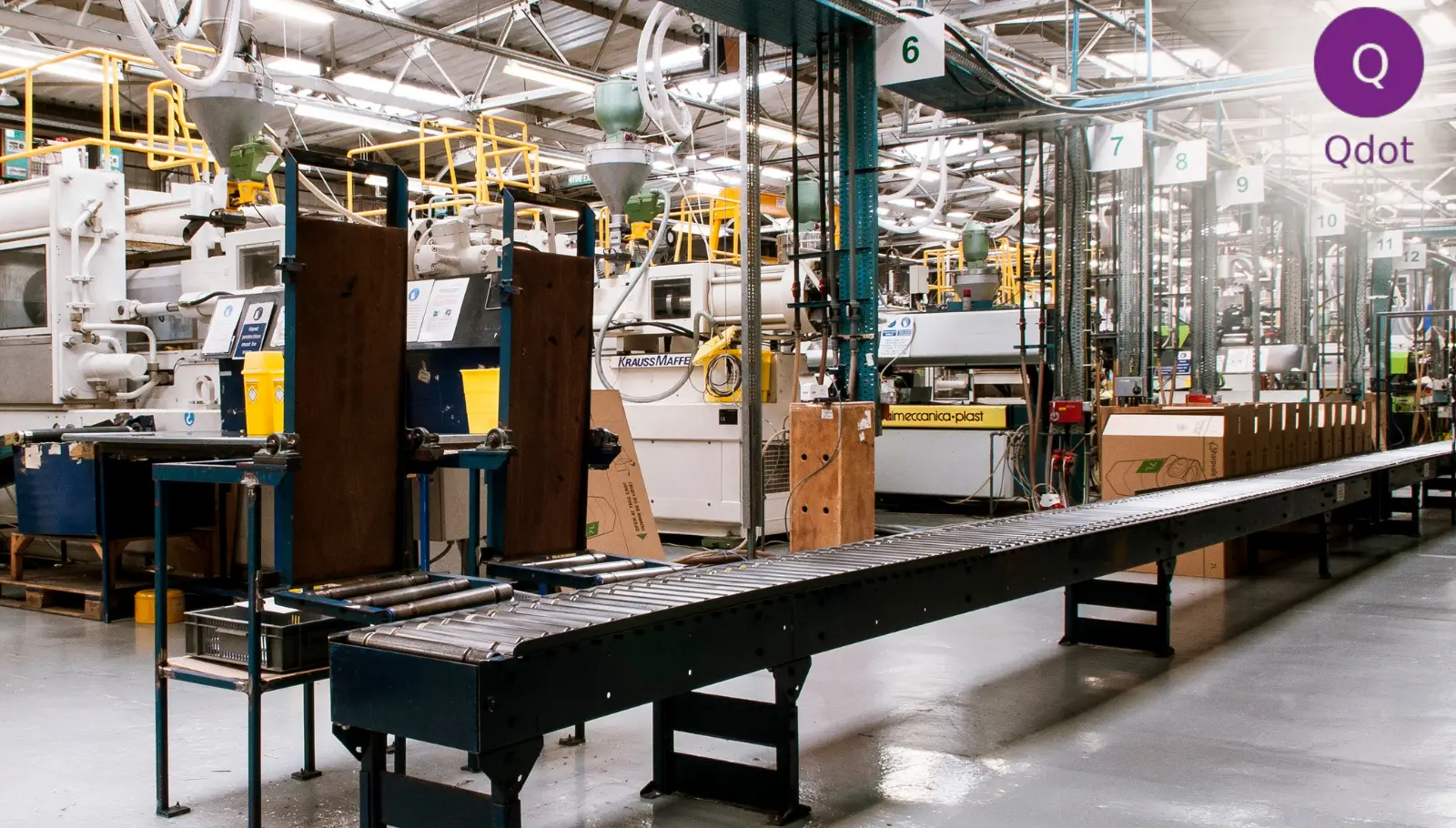
Manufacturing is one of the most essential industries in Pakistan's economy, covering everything from food production and textiles to chemicals, machinery, electronics, and furniture. As raw materials move through increasingly complex production lines, manufacturers face growing pressure to prove consistent quality, safe working conditions, and environmentally responsible operations. Qdot supports manufacturing businesses across Pakistan in achieving the ISO certifications suited to their specific production line and industry segment.
With clients in Karachi, Lahore, Islamabad, Faisalabad, Sialkot, Gujranwala, and other major industrial hubs, Qdot provides hands-on consultancy covering documentation, system implementation, staff training, and audit coordination.
Key Segments of the Manufacturing Industry
Food Product Manufacturing
Covers meat and poultry processing, fruit and vegetable processing, and beverage production, including soft drinks, alcoholic beverages, and bottled water.
Chemical and Chemical Product Manufacturing
Includes basic chemicals such as fertilizers and industrial gases, pharmaceutical products, and paints and coatings.
Textile Manufacturing
Spans textile fiber spinning and weaving, apparel production, and footwear and leather goods manufacturing.
Machinery and Equipment Manufacturing
Covers industrial machinery, electrical equipment such as motors and generators, and specialized machinery built for specific uses like food processing or textiles.
Electrical and Electronics Manufacturing
Includes consumer electronics, telecom devices, and computer peripherals such as printers and storage devices.
Furniture Manufacturing
Covers office and home furniture, plus wooden and metal furniture production for residential and commercial use.
Why Certification Matters for This Sector
Manufacturing operations face growing scrutiny on product quality, worker safety, environmental impact, and energy use. Certification gives these businesses a structured way to demonstrate that raw materials, production lines, and finished goods are managed to a consistent, verifiable standard.
ISO 9001 – Quality Management
Helps manufacturers standardize processes, reduce defects, and build consistency across production lines and finished goods.
ISO 14001 – Environmental Management
Supports manufacturers in managing waste, emissions, and resource use associated with industrial production.
ISO 45001 – Occupational Health and Safety
A focused safety management system for factory floors, addressing hazards from heavy machinery, chemicals, and production equipment.
ISO 50001 – Energy Management
Helps energy-intensive manufacturing operations track and reduce energy consumption across production facilities.
ISO 22000 – Food Safety Management
A dedicated food safety system for manufacturers involved in food and beverage production.
ISO 13485 – Medical Devices Quality Management
Sets quality management requirements specifically for manufacturers of medical devices and equipment.
Qdot advises on the right combination of standards depending on which manufacturing segment a business operates in.
Importance for Pakistan's Manufacturing Sector
As Pakistan's manufactured goods reach more industrial buyers and export markets, certification has become central to:
- Meeting the compliance requirements of government tenders and industrial buyers
- Reducing workplace incidents on factory floors and production lines
- Improving environmental management across manufacturing facilities
- Building credibility with buyers, regulators, and trade bodies
This applies to food, textile, chemical, machinery, electronics, and furniture manufacturers based in Karachi, Lahore, Faisalabad, Sialkot, and other industrial regions.
Qdot's Certification Services for This Industry
Qdot works with businesses across the manufacturing value chain, offering:
- Gap analysis against the relevant ISO standard
- Documentation and record-keeping systems built for factory and production line operations
- Worker and staff training on quality, safety, and environmental practices
- Internal audits and pre-certification readiness checks
- Coordination with certification bodies through to final audit
- Ongoing support to maintain certification and prepare for renewal
Whether the goal is a single certification or a combined quality, environmental, and safety system, Qdot manages the process from first assessment to certificate issuance.
Certification Process – Step by Step
- Initial Assessment: Review current production practices against the chosen standard and identify gaps.
- Documentation Preparation: Build the procedures, records, and controls the standard requires.
- Implementation & Training: Train factory staff and workers on the new procedures and safety practices.
- Internal Audit & Review: Run a pre-certification audit and correct any non-conformities.
- Final Certification Audit: Coordinate with the certification body to complete the formal audit.
- Continuous Support: Maintain compliance and prepare for periodic surveillance audits and renewal.
Key Benefits of Certification
- Safer Facilities: Reduce workplace incidents through structured occupational health and safety management.
- Fewer Compliance Issues: Catch quality, environmental, and safety issues before they become regulatory problems.
- Stronger Documentation: Track production, incidents, and controls across every facility.
- Buyer and Regulator Confidence: Give buyers and government bodies a verifiable reason to trust your operation.
- Operational Consistency: Standardize processes across production lines and manufacturing units.
- Long-Term Market Access: Support entry into tenders, contracts, and export markets that require formal certification.
Certification Cost
Cost depends on a few factors:
- Which standard or combination of standards is needed
- Size and number of facilities or production lines
- Current level of documentation and compliance
- Scope of certification (single facility vs. full operation)
Qdot puts together a consultancy package suited to the size and stage of the business.
Certificate Validity and Maintenance
Validity: Most certifications are valid for three years, with annual or periodic surveillance audits.
Maintenance: Records, training, and internal audits need to stay current between surveillance visits.
Qdot supports clients through the full certification cycle, including renewal preparation.
Building Trust with Buyers and Regulators
For manufacturing businesses, certification is more than a compliance requirement — it is proof of consistent, safe, and environmentally responsible production. It gives Pakistani manufacturers a stronger position when bidding for contracts and working with regulators and industrial buyers.
Why Choose Qdot for This Sector
- Experience across quality, environmental, safety, food safety, and medical device standards relevant to manufacturing
- Practical, on-ground support from documentation through to final audit
- Presence across Karachi, Lahore, Islamabad, Faisalabad, Sialkot, Gujranwala
- Guidance tailored to the realities of factory floor and production line operations
- Focus on long-term compliance, not just a one-time certificate
Qdot helps make certification a straightforward, manageable process rather than a burden on day-to-day production operations.
Get in Touch with Qdot
Looking to certify your manufacturing business? Qdot provides full support for:
- Documentation and system setup
- Worker and staff training
- Audit coordination and certification
- Ongoing compliance and renewal support
FAQs
Cost depends on your facility size, number of production lines, and the ISO standard you are implementing. Qdot's consultancy fee is separate from the certification body's audit fee. Contact us for a free quote based on your specific operation.
Most manufacturing operations achieve certification within 6–10 weeks, depending on facility complexity, documentation readiness, and audit scheduling.
ISO 9001 for quality management, ISO 14001 for environmental management, ISO 45001 for occupational health and safety, ISO 50001 for energy management, ISO 22000 for food safety, and ISO 13485 for medical device manufacturers are the standards most relevant to the manufacturing sector.
Yes, on-site and remote training sessions are available on ISO 45001 awareness, hazard identification, internal auditing, and documentation handling for factory workers and supervisors.
Absolutely. ISO certification is often a prerequisite for government tenders, export contracts, and large buyer registrations in Pakistan.
Yes. Our consultants help you write quality manuals, procedures, and SOPs that reflect how your facility actually operates, rather than generic templates copied from the internet. This makes the documentation easier for your team to follow day to day and easier for the auditor to verify during the certification audit.
ISO consultancy services are available across Pakistan, including Karachi, Lahore, Islamabad, Faisalabad, Sialkot, Gujranwala, and other industrial zones nationwide.
Ongoing support is provided for surveillance audits, recertification, and compliance monitoring to ensure continued adherence to standards.