
 UAE
UAE
 Qatar
Qatar
 Pakistan
 KSA
KSA
 Oman
Oman
 Kuwait
 Bahrain
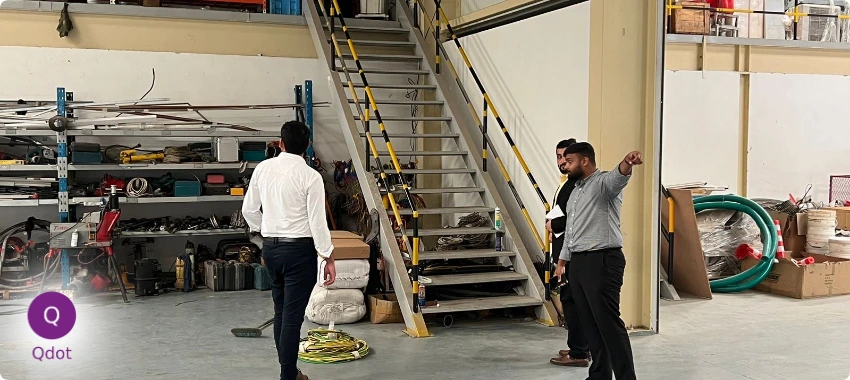
ISO 45001 Consultancy in Pakistan helps organizations build and improve a structured Occupational Health and Safety Management System for identifying workplace hazards, reducing OH&S risks, strengthening worker participation and preparing for independent certification.
Qdot supports businesses with ISO 45001 gap assessment, hazard identification and risk assessment, legal register development, OH&S documentation, operational controls, worker consultation, staff awareness, internal audits, management review and certification-audit preparation.
Qdot provides consultancy and implementation support. We do not issue ISO 45001 certificates. The certification audit, certification decision and certificate are provided independently by the selected certification body.
What Is ISO 45001?
ISO 45001 is the international standard for Occupational Health and Safety Management Systems. It provides a framework that organizations can use to manage workplace health and safety risks, improve OH&S performance and create safer working conditions.
ISO 45001 can help organizations establish systematic controls for:
- Workplace hazard identification
- Occupational health and safety risk assessment
- Legal and other compliance obligations
- Worker consultation and participation
- Emergency preparedness and response
- Contractor and supplier controls
- Incident investigation
- Internal audits
- Management review
- Corrective action and continual improvement
Current ISO 45001 Edition
ISO 45001:2018 remains the current published edition of the Occupational Health and Safety Management System standard.
ISO 45001:2018/Amd 1:2024 introduced climate-action considerations into the management-system context. Organizations implementing ISO 45001 should therefore consider the current published standard together with the applicable amendment.
A future second edition of ISO 45001 is under development, but organizations should currently implement and maintain their OH&S Management System against the published ISO 45001:2018 requirements and relevant amendment.
Why ISO 45001 Consultancy Matters in Pakistan
Organizations in Pakistan operate across manufacturing, construction, engineering, textile, logistics, healthcare, energy and other sectors where workplace hazards can vary significantly.
A practical ISO 45001 consultancy project helps an organization move beyond basic safety documents by building an OH&S Management System around its actual activities, workers, contractors, legal obligations and risk profile.
Common implementation challenges include:
- Incomplete hazard identification
- Generic or outdated risk assessments
- Unclear legal registers
- Weak worker consultation
- Insufficient contractor controls
- Poor incident investigation
- Inconsistent training records
- Weak internal audits
- Management reviews conducted only for certification
What Does an ISO 45001 Consultant Do?
An ISO 45001 consultant helps organizations understand the standard and translate its requirements into practical controls that fit the workplace.
Consultancy support may include:
- Initial gap assessment
- OH&S scope definition
- Context and interested-party review
- Hazard identification and risk assessment
- Legal and compliance-obligation review
- OH&S policy and objectives
- Operational-control development
- Worker consultation and participation
- Emergency-preparedness planning
- Training and awareness
- Internal audit
- Management review
- Corrective actions
- Certification-audit preparation
Key ISO 45001 Requirements We Help Implement
Context of the Organization
The organization should understand internal and external issues that can affect its Occupational Health and Safety Management System, including workplace conditions, regulatory requirements, business activities, contractor arrangements and workforce needs.
Interested Parties
Relevant interested parties may include workers, contractors, regulators, customers, suppliers, owners and other parties whose requirements can affect the OH&S Management System.
OH&S Management System Scope
The organization should define which locations, activities, workers and processes are included within the scope of the OH&S Management System.
Leadership and OH&S Policy
Top management should demonstrate leadership, establish an appropriate OH&S policy, assign responsibilities and provide resources for effective implementation.
Consultation and Participation of Workers
Worker participation is a central ISO 45001 requirement. Organizations should involve relevant workers in hazard identification, risk assessment, incident investigation, development of controls and improvement activities.
Hazard Identification
Organizations should identify hazards associated with routine and non-routine work, people, equipment, materials, contractors, visitors, workplace changes and emergency situations.
OH&S Risks and Opportunities
Identified hazards should be evaluated so the organization can prioritize significant risks and establish appropriate controls.
Legal and Other Requirements
The organization should identify applicable occupational health and safety legal requirements and other obligations relevant to its operations and maintain a process for keeping this information current.
OH&S Objectives
Organizations should establish measurable OH&S objectives where practicable and monitor progress toward achieving them.
Competence and Awareness
Workers should have appropriate competence for activities that can affect health and safety and should understand relevant hazards, controls, responsibilities and emergency arrangements.
Communication
The organization should establish appropriate internal and external communication processes for OH&S matters.
Documented Information
Documented information should support effective implementation without creating unnecessary paperwork. Records should demonstrate that required controls and activities are being performed.
Operational Planning and Control
Organizations should establish controls for significant workplace risks, including controls for equipment, activities, contractors, procurement and outsourced processes where applicable.
Management of Change
Changes to equipment, processes, materials, work methods, staffing or workplace arrangements should be reviewed for potential OH&S risks before implementation where applicable.
Emergency Preparedness and Response
Potential emergencies should be identified and suitable response plans, responsibilities, drills and resources should be established.
Monitoring and Measurement
Organizations should monitor relevant OH&S performance indicators, incidents, objectives, compliance activities and effectiveness of controls.
Compliance Evaluation
The organization should periodically evaluate whether applicable OH&S compliance obligations are being addressed.
Internal Audit
Internal audits help determine whether the OH&S Management System conforms to planned requirements and is effectively implemented.
Management Review
Top management should review OH&S performance, objectives, audit results, incidents, resources, worker feedback and improvement opportunities.
Incident, Nonconformity and Corrective Action
Incidents and nonconformities should be investigated, causes identified and appropriate corrective actions implemented.
Continual Improvement
The OH&S Management System should improve over time using information from risk assessments, incidents, audits, worker participation and management review.
Hazard Identification and Risk Assessment (HIRA)
Hazard Identification and Risk Assessment is one of the most important elements of an ISO 45001 implementation project.
Qdot can support organizations in:
- Identifying routine and non-routine hazards
- Considering workers, contractors and visitors
- Assessing severity and likelihood
- Developing risk-rating criteria
- Maintaining HIRA or risk registers
- Defining risk-control measures
- Applying the hierarchy of controls
- Reviewing assessments after incidents or significant change
Risk assessments should reflect actual workplace conditions rather than generic examples copied from another organization.
Worker Consultation and Participation
ISO 45001 places strong emphasis on consulting workers and enabling their participation in the OH&S Management System.
Organizations should create practical methods for workers to contribute to:
- Hazard identification
- Risk assessment
- Incident investigation
- Development of safety controls
- Internal audits where appropriate
- Improvement opportunities
Consultation should be meaningful and appropriate to the workforce rather than limited to signatures on meeting records.
OH&S Legal Register and Compliance Support
ISO 45001 helps organizations establish a structured process for identifying applicable occupational health and safety legal requirements and evaluating compliance.
A legal register may include relevant requirements connected with workplace safety, emergency arrangements, worker welfare, equipment, hazardous substances and industry-specific obligations, depending on the organization's operations and location.
ISO 45001 certification does not replace an organization's legal responsibilities or automatically prove compliance with every applicable law.
ISO 45001 Documentation Support
The amount of documentation needed depends on the organization's size, processes, hazard profile and existing OH&S controls.
Typical documented information may include:
- OH&S scope
- OH&S policy
- Hazard and risk register
- Legal register
- OH&S objectives
- Operational procedures
- Emergency-response plans
- Training records
- Inspection records
- Incident reports
- Internal audit records
- Management review records
- Corrective-action records
ISO 45001 Consultancy Process in Pakistan
Step 1: Initial Scope and Gap Assessment
Review the organization's operations, existing OH&S controls, workplace risks and current level of conformity with ISO 45001 requirements.
Step 2: Context and Interested-Party Review
Identify relevant internal and external issues, interested parties and requirements that affect the OH&S Management System.
Step 3: Hazard Identification and Risk Assessment
Identify workplace hazards, assess OH&S risks and define priorities for control.
Step 4: Legal and Compliance-Obligation Review
Identify relevant occupational health and safety requirements and establish a process for maintaining and evaluating compliance obligations.
Step 5: OH&S Objectives and Planning
Develop practical OH&S objectives and actions based on significant risks, legal obligations and business priorities.
Step 6: Documentation Development
Prepare the policies, procedures, registers, forms and records necessary to support the OH&S Management System.
Step 7: Operational-Control Implementation
Implement controls for workplace hazards, contractors, procurement, equipment, emergency arrangements and other relevant areas.
Step 8: Worker Consultation and Participation
Establish methods for consulting workers and involving them in relevant OH&S activities.
Step 9: Competence and Awareness
Train relevant employees according to their roles, hazards and responsibilities.
Step 10: Emergency Preparedness
Review potential emergencies and establish suitable response arrangements, drills and responsibilities.
Step 11: Internal Audit
Conduct a structured internal audit to evaluate implementation and identify gaps before certification.
Step 12: Management Review
Top management reviews OH&S performance, incidents, objectives, audit findings, worker feedback and improvement opportunities.
Step 13: Corrective Actions
Address identified nonconformities and implementation gaps before the independent certification assessment.
Step 14: Certification-Audit Preparation
Once the system is functioning effectively, Qdot can support the organization in preparing for the independent certification audit.
ISO 45001 Internal Audit Support
Internal audits help determine whether the OH&S Management System has been properly implemented and maintained.
Qdot can support:
- Audit planning
- Process-based audit checklists
- Internal auditor guidance
- Audit reporting
- Corrective-action follow-up
ISO 45001 Management Review Support
Management review provides top management with a structured opportunity to evaluate whether the OH&S Management System remains suitable, adequate and effective.
Relevant review inputs may include incidents, audit results, legal compliance, objectives, worker consultation, risk assessments, resources, corrective actions and improvement opportunities.
Preparing for the ISO 45001 Certification Audit
After the OH&S Management System has been implemented, internally audited and reviewed by management, the organization can proceed toward an independent certification assessment.
Qdot can support certification readiness by reviewing documentation, records, implementation evidence, open corrective actions and employee awareness. The external certification body remains responsible for conducting the certification audit and making the certification decision.
For detailed information about certification audits, certificate requirements and the certification process, visit our ISO 45001 Certification in Pakistan page.
ISO 45001 Consultancy Cost in Pakistan
There is no single fixed consultancy fee for every organization. ISO 45001 consultancy cost depends on factors such as:
- Organization size
- Number of employees
- Number of sites
- Industry risk profile
- Complexity of workplace hazards
- Existing OH&S controls
- HIRA complexity
- Documentation needs
- Training requirements
- Internal audit support
- Level of consultant involvement
Qdot consultancy fees and certification-body fees are separate cost components. A consultancy quotation can be prepared after reviewing the organization's scope and current level of readiness.
How Long Does ISO 45001 Consultancy Take?
The implementation timeline depends on organization size, number of sites, hazard profile, current OH&S maturity, documentation gaps, management involvement, worker participation, training requirements and corrective actions.
A gap assessment is normally the best starting point for estimating the amount of work required.
Industries We Support
ISO 45001 can be implemented across many sectors, including:
- Manufacturing
- Construction
- Engineering
- Textile and garment
- Oil and gas support services
- Logistics and warehousing
- Food processing
- Healthcare
- Pharmaceuticals
- Utilities
- Service companies
- Public-sector organizations
- SMEs
ISO 45001 Consultancy Across Pakistan
Qdot provides ISO 45001 consultancy support across Pakistan, including Lahore, Karachi, Islamabad, Rawalpindi, Faisalabad, Sialkot, Gujranwala, Multan and other locations.
The implementation approach should reflect the organization's actual hazards and operations rather than rely on generic city-based documentation.
ISO 45001 Consultancy vs ISO 45001 Certification
ISO 45001 consultancy includes activities such as gap assessment, HIRA, legal register development, documentation, implementation, worker participation, training, internal audit, management review and certification preparation.
ISO 45001 certification is the independent assessment performed by a certification body, followed by its certification decision and certificate issuance where the organization meets the applicable requirements.
Qdot provides consultancy and implementation support. The certification body remains independent and responsible for the certification decision.
ISO 45001 Awareness and Internal Auditor Training
Training supports implementation by helping employees understand their responsibilities, relevant hazards, operational controls and the requirements of the OH&S Management System.
Depending on the organization, training may include ISO 45001 awareness, internal auditor training, hazard and risk assessment guidance, incident investigation or role-specific OH&S awareness.
Why Choose Qdot for ISO 45001 Consultancy?
Qdot has been providing management-system consultancy since 2016. Our focus is practical implementation rather than creating documentation only for an audit.
Our ISO 45001 support focuses on:
- Understanding actual workplace hazards
- Developing practical risk controls
- Avoiding unnecessary documentation
- Strengthening worker participation
- Improving internal audit quality
- Preparing management for review
- Supporting certification readiness while remaining independent from the certification body
Get ISO 45001 Consultancy Support in Pakistan
If your organization is planning to implement ISO 45001, improve an existing OH&S Management System or prepare for independent certification, the first step is to understand your current level of readiness.
Qdot can review your workplace hazards, HIRA, legal register, documentation, worker-participation arrangements, internal audits and certification readiness and develop an implementation plan based on your actual business needs.
FAQs
An ISO 45001 consultant helps organizations identify hazards, assess occupational health and safety risks, develop required processes and documentation, support worker participation, conduct internal audits and prepare for independent certification.
ISO 45001:2018 remains the current published standard. Amendment 1:2024 is also published, while a future second edition is still under development.
Services may include gap assessment, HIRA, legal register development, OH&S documentation, operational controls, worker consultation, training, internal audit, management review and certification preparation.
Cost depends on organization size, number of sites, industry risk profile, existing OH&S controls, documentation needs and the level of consultancy support required.
The timeline depends on the organization's size, hazard profile, current OH&S maturity, documentation gaps, training requirements and implementation progress.
Yes. ISO 45001 can be implemented by organizations of different sizes, with controls and documentation proportionate to the business and its occupational health and safety risks.
No. Qdot provides ISO 45001 consultancy and implementation support. The independent certification body performs the certification audit and makes the certification decision.