
 UAE
 Qatar
 Pakistan
 KSA
 Oman
 Kuwait
 Bahrain
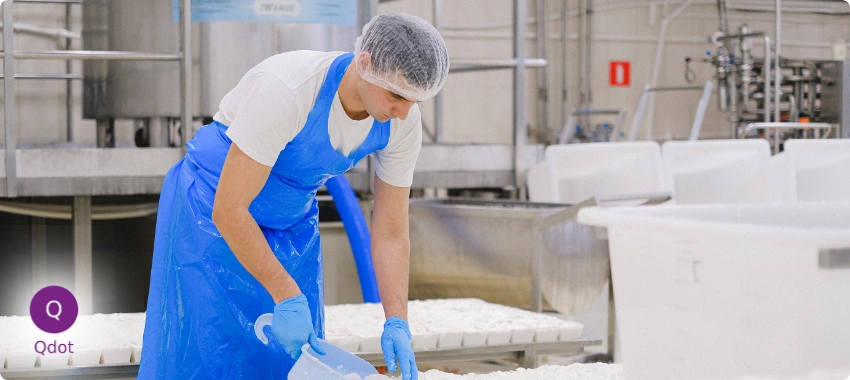
Halal certification in Pakistan helps a business show that its products, ingredients and relevant processes meet applicable Halal requirements. It matters most for food processing, meat and poultry, beverages, restaurants, cosmetics, pharmaceuticals, packaging and export-oriented companies, where customers or destination markets expect proof of Halal conformity.
Certification involves more than checking individual ingredients. Raw materials, suppliers, production methods, storage, cleaning, handling, traceability and the risk of cross-contamination can all come under review.
Qdot supports organizations across Pakistan with Halal consultancy, gap assessment, documentation, staff guidance and audit preparation.
Please note: Qdot is a consultancy company and does not issue Halal certificates. The certification decision and the certificate itself come from the Halal Certification Body you select.
What Is Halal Certification?
Halal certification is an independent assessment that checks whether products and the related business processes conform to applicable Halal requirements. Depending on your type of business, the assessment may look at:
- ingredients and raw materials
- suppliers and supporting certificates
- production and processing methods
- storage and segregation
- cleaning and sanitation
- packaging and labeling
- traceability
- transportation
- handling of non-Halal materials
- slaughtering requirements, where applicable
- employee awareness and responsibilities
The exact scope depends on the product, facility, industry and the market where the product will be sold.
Why Halal Certification Matters in Pakistan
Pakistan has a large domestic market for Halal products and a real opportunity to supply Halal products abroad. Buyers, distributors, retailers, regulators and overseas customers may ask for certification as part of their supplier-approval requirements.
A structured Halal system can help a business:
- demonstrate compliance with applicable Halal requirements
- keep better control over ingredients and suppliers
- reduce the risk of contamination with non-Halal materials
- improve product traceability
- build customer confidence
- prepare for customer and certification audits
- access markets that require recognized Halal certification
- keep Halal controls consistent as the business grows
A certificate is not just a logo. The business has to keep the controls on which the certification is based.
Halal Certification Framework in Pakistan
Pakistan has a formal framework for Halal certification, accreditation and recognition. Businesses normally get certified through a Halal Certification Body whose scope covers the products or services being certified. The Pakistan Halal Authority and Pakistan's accreditation framework both play a part in the country's Halal conformity system.
Choosing the right route matters. Requirements can differ depending on whether you sell only in Pakistan or export to countries such as Saudi Arabia, the UAE, Malaysia or Indonesia. An overseas customer may require certification from a body recognized by a specific authority in the destination country, so exporters should confirm the required recognition before starting.
Qdot can help you understand your certification scope and prepare your systems. The assessment and the certificate are handled independently by the Certification Body.
Who Needs Halal Certification in Pakistan?
Halal certification can be relevant to any organization that produces, processes, handles or supplies products where Halal status is important.
Food manufacturers
Ingredients, additives, processing aids, production methods and handling practices need to meet applicable Halal requirements.
Meat and poultry businesses
Slaughtering, processing, storage, traceability and handling controls carry extra weight for meat and poultry.
Restaurants and catering businesses
Restaurants, hotels, commercial kitchens and caterers may seek certification to give customers more assurance about ingredients and food preparation.
Dairy and beverage companies
Flavorings, enzymes, cultures, emulsifiers and other ingredients may need review during the assessment.
Cosmetics and personal care manufacturers
Cosmetic ingredients can come from animal, plant, synthetic or chemical sources, so their origin and processing may need checking.
Pharmaceutical businesses
Some ingredients, capsules, processing aids and manufacturing processes may need Halal verification, depending on the product and scope.
Exporters
Exporters should find out the Halal recognition requirements of their destination market before choosing a Certification Body.
How to Get Halal Certification in Pakistan
The journey differs from one organization to another, but it usually follows these steps.
Step 1: Define the certification scope
Decide what needs to be certified: products, product categories, manufacturing locations, activities and target markets. Exporters should consider destination-country requirements at this stage.
Step 2: Run a Halal gap assessment
A gap assessment compares your current practices with the applicable Halal requirements. It can cover raw materials, ingredients, suppliers, processing methods, equipment, cleaning, storage, labeling, traceability, transportation and cross-contamination controls. The aim is to find problems before the formal audit does.
Step 3: Review ingredients and suppliers
Each relevant ingredient needs enough information to confirm it is suitable. Depending on the material, that can mean product specifications, ingredient composition, supplier declarations, Halal certificates, source information, manufacturing details or supporting technical documents. You also need a way to approve new suppliers and ingredients.
Step 4: Prepare Halal documentation
Your procedures and records should show how Halal controls are maintained. Typical documents include:
- Halal policy
- product lists
- approved supplier list
- ingredient records
- process flow diagrams
- cleaning procedures
- traceability records
- segregation controls
- training records
- internal monitoring records
- corrective-action records
Documents should describe what your business actually does, not what looks good for the audit.
Step 5: Put the controls into practice
Staff in purchasing, production, warehousing, quality control and other relevant areas need to understand their responsibilities. Any risk of mixing or contamination should be controlled.
Step 6: Apply to a suitable Halal Certification Body
Once you are ready, submit an application to a Certification Body whose scope fits your products. The body sets its own application, document-review and audit requirements under its certification scheme.
Step 7: Halal certification audit
Auditors review your documentation, facility and operational controls. They may check ingredient approval, supplier controls, production practices, storage, segregation, cleaning, traceability, staff awareness, records and labeling.
Step 8: Close audit findings
If the audit raises nonconformities or other findings, you need to correct them and send evidence. The Certification Body reviews your corrective actions before it makes a decision.
Step 9: Certification decision
When the applicable requirements are met, the Certification Body may issue the Halal certificate for the approved scope. You then need to keep your Halal controls running throughout the certification period.
Halal Certification Requirements in Pakistan
No single document list applies to every organization. Requirements depend on the product, process, certification scheme and market. Still, you should be ready to provide information such as:
- company registration information
- manufacturing-site details
- complete product list
- raw-material and ingredient list
- product specifications
- supplier details
- supplier Halal certificates or declarations, where applicable
- manufacturing process flow
- cleaning and sanitation procedures
- storage controls
- segregation arrangements
- traceability records
- packaging information and product labels
- employee training records
- internal Halal procedures
- slaughtering controls, where applicable
A gap assessment before certification shows which documents and controls actually apply to your business.
Halal Certification Cost in Pakistan
There is no fixed price for Halal certification in Pakistan. The total depends on:
- number of products
- number of manufacturing locations
- organization size
- certification scope
- complexity of ingredients
- number and type of suppliers
- audit duration
- laboratory testing, where required
- the Certification Body selected
- local or export-market requirements
- surveillance or renewal arrangements
Consultancy fees and Certification Body fees are separate. Qdot can review where you stand today and quote for consultancy, documentation and implementation support. Fees charged by the Certification Body or a laboratory are set by those organizations.
Be careful with any claim that every Halal certificate costs the same.
How Long Does Halal Certification Take?
It depends mostly on how ready you are. A business with controlled suppliers, complete ingredient information, good traceability and established procedures usually moves faster than one that first has to replace ingredients, collect missing supplier documents or build new controls.
The timeline is affected by the number of products, ingredient complexity, supplier documentation, number of facilities, existing procedures, required corrective actions, audit scheduling, laboratory testing and the Certification Body's review time. Rather than promise a number of days before knowing your scope, it is better to assess your readiness first.
Halal Certification for Exporters in Pakistan
Exporters should look at certification requirements early, not when a shipment is already packed. Recognition rules differ between destinations, and a certificate that works for one market may not satisfy another.
Before choosing a Certification Body, confirm:
- the destination country
- the product category
- the applicable Halal requirements
- whether recognition of a specific certification body is required
- any product-registration or labeling rules that apply separately
Qdot can help you prepare internal systems and documentation for local or export certification. The final choice of Certification Body should follow your scope and the recognition your market requires.
Halal Consultancy Services by Qdot
We help businesses build practical Halal controls before the independent certification audit. Our support can include:
- initial Halal gap assessment
- certification-scope review
- ingredient and supplier-document review
- Halal policy and procedure development
- documentation preparation
- process-flow review
- segregation and contamination-control guidance
- traceability-system support
- employee awareness sessions
- implementation and internal review
- corrective-action support
- certification-audit preparation
Our job is to prepare and support your organization. We do not make the certification decision or issue the Halal certificate.
Halal Certification Across Pakistan
Qdot works with organizations in Lahore, Karachi, Islamabad, Rawalpindi, Faisalabad, Sialkot, Gujranwala, Multan and other cities. What we recommend depends on the type of operation, not the city. A food manufacturer in Lahore, an exporter in Sialkot and a processing facility in Karachi can each have different products, scopes and market requirements.
So we start by understanding your business, products and intended scope, and only then recommend an approach.
Why Work With Qdot?
Halal preparation gets difficult when ingredient records, supplier documents and operating procedures are handled separately. We look at how your business actually runs and point out what needs fixing before the audit. The goal is for your team to understand and maintain the system, not just to hand an auditor a set of documents.
Businesses work with us for certification readiness, practical documentation, ingredient and supplier review, implementation, staff awareness, audit preparation, corrective actions and ongoing improvement of their Halal system.
Get Support for Halal Certification in Pakistan
The first step is knowing exactly what needs to be certified and where your current system falls short. Qdot can review your products, ingredients, suppliers, documentation and processes, and help you prepare for the independent certification audit.
Contact Qdot to discuss your Halal certification scope, documentation requirements and consultancy needs in Pakistan.
FAQs
Halal certification is an independent verification that products, ingredients and relevant processes comply with applicable Halal requirements. Certification is issued by the appropriate Halal Certification Body for the approved scope.
The process normally involves defining the certification scope, reviewing ingredients and suppliers, completing a gap assessment, preparing documentation, implementing Halal controls, applying to a suitable Halal Certification Body, completing an audit and addressing any findings before the certification decision.
Requirements vary by product and certification scope but can include approved ingredients, supplier records, product specifications, traceability, cleaning procedures, segregation controls, labeling information, staff training and documented Halal procedures.
The cost depends on factors such as business size, number of products and locations, certification scope, ingredient complexity, audit requirements and the Halal Certification Body selected. Consultancy fees and Certification Body charges should be considered separately.
There is no single timeline for every business. The duration depends on organizational readiness, product complexity, availability of ingredient and supplier information, corrective actions and the Certification Body's audit schedule.
Halal certification is commonly relevant to food manufacturers, meat and poultry processors, restaurants, caterers, exporters, cosmetics companies, pharmaceutical businesses and other organizations where Halal conformity is important. Whether certification is mandatory or commercially required depends on the applicable product, customer, regulator and market.
Yes. Pakistani businesses can obtain Halal certification for export, but the required Halal Certification Body and recognition arrangements should be checked for the intended destination country and product category before certification begins.